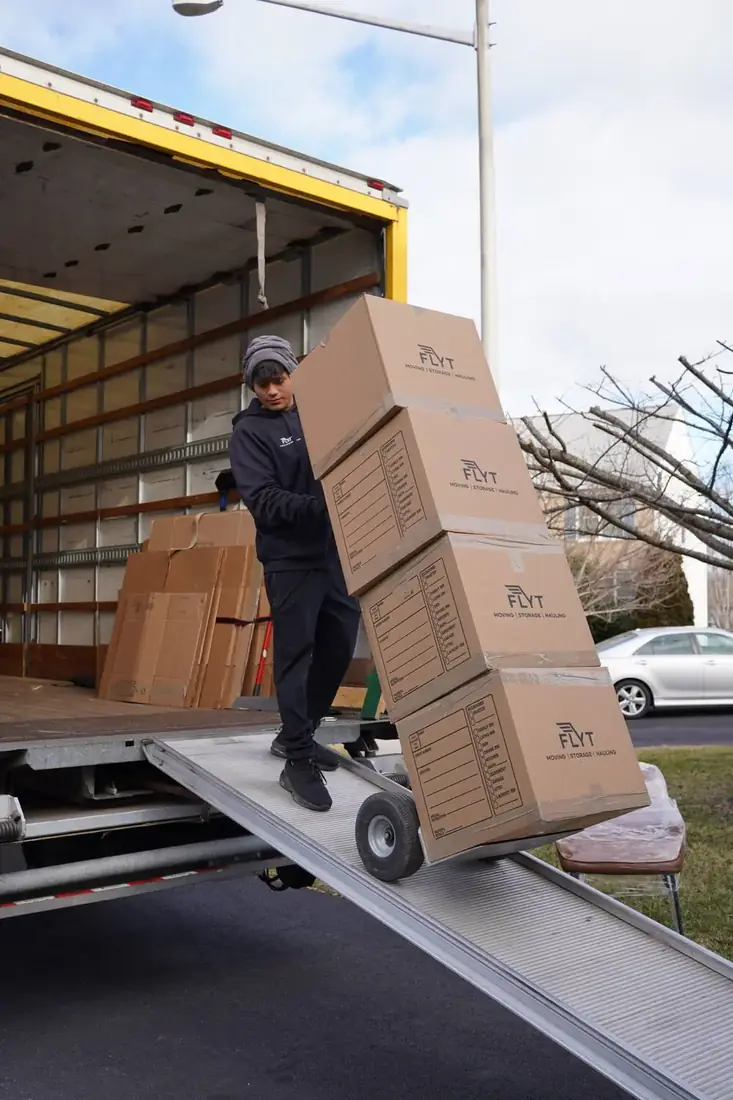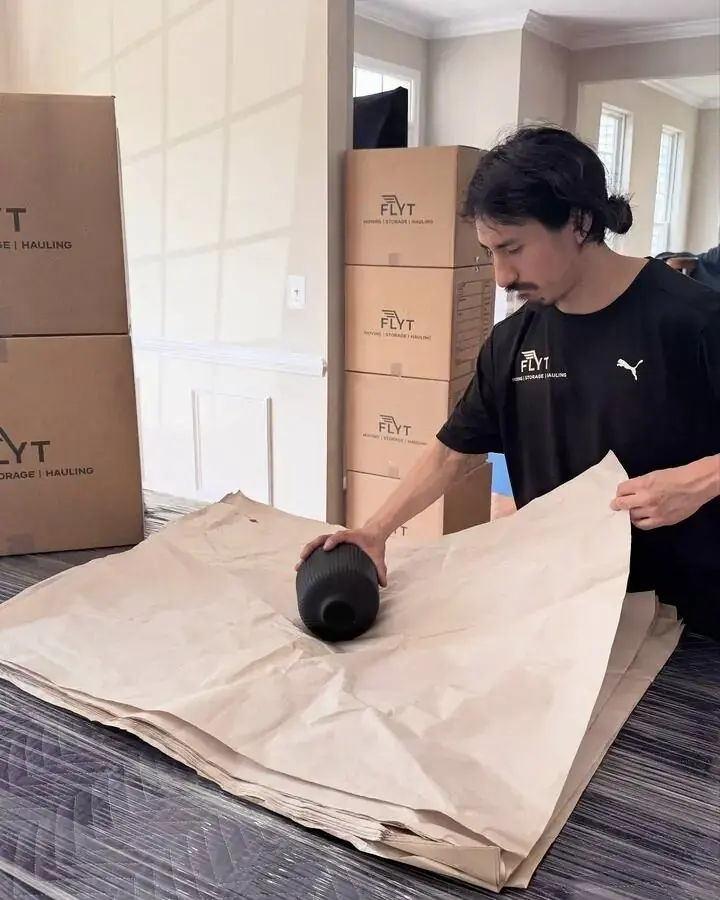


The move itself is rarely the hard part. What trips people up is the stuff around it: where the truck can legally park, whether the building needs paperwork before the crew walks in, and who else booked the elevator that morning. In the DMV these details change block by block. A permit that's routine in DC means nothing in Reston, and a Tysons high-rise runs on its own rules. Sort these out a week or two ahead and moving day runs on time. Leave them to the morning of and you're paying a crew to wait. Here's what to line up, and where FLYT steps in.
Reserve the loading zone before the day
A truck parked far from the door means a longer carry, and on an hourly local move, longer carries cost you time. In dense spots like Old Town Alexandria, Clarendon, or the Rosslyn corridor, street parking fills before eight in the morning. If your building has a designated loading dock or a couple of reservable spots out front, call and claim your window now. For a house, just ask a neighbor or two to leave the curb clear that morning. Cones or a car holding the space until the truck arrives make a real difference on a narrow street.
In DC, you need a DDOT no-parking permit
Washington DC is its own animal. To legally hold curb space for a moving truck you request an emergency no-parking permit through DDOT, and they post the temporary signs at the location ahead of your date. Apply early, because processing and sign posting take days, not hours. Without those posted signs a legally parked car can sit right where your truck needs to be, and you have no recourse. If you're moving into or out of the District, start this the moment you have a confirmed date. Your move coordinator can walk you through what the building or block requires.
High-rises and HOAs want a COI
Most managed buildings in Reston, Tysons, and along the Silver Line require a Certificate of Insurance before movers can work, and plenty of HOAs do too. A COI is a document from the mover's insurer naming the building or association as protected for the day. Property managers often want it a few business days ahead, sometimes with specific coverage amounts and exact wording. Get your building's requirements in writing early and hand them to us. FLYT is licensed and insured, and we issue COIs regularly, so this is routine on our end.
Book your elevator window
In a high-rise, the freight or service elevator is the bottleneck. Buildings hand out reserved elevator windows, often two to four hours, and pad the car for moves. If another resident booked your slot, your crew waits. Reserve your window as soon as your date is set, aim for an off-peak time if you can, and confirm whether the elevator gets keyed to your floor. A same-day walk-through with the front desk to find the loading door, the freight car, and the route to your unit keeps the clock from running while everyone hunts for the path.
How FLYT helps you line it up
You don't have to figure this out alone. Every FLYT move comes with a dedicated coordinator who asks about your building up front: dock access, COI wording, elevator rules, and any parking permit you'll need. We prep the certificate, plan the truck's approach, and time the crew's arrival to your elevator window so the reserved hours aren't burning while boxes sit in the lobby. Tell us the building's name and management company early and we'll handle the paperwork side, so day-of is about carrying furniture, not chasing signatures.