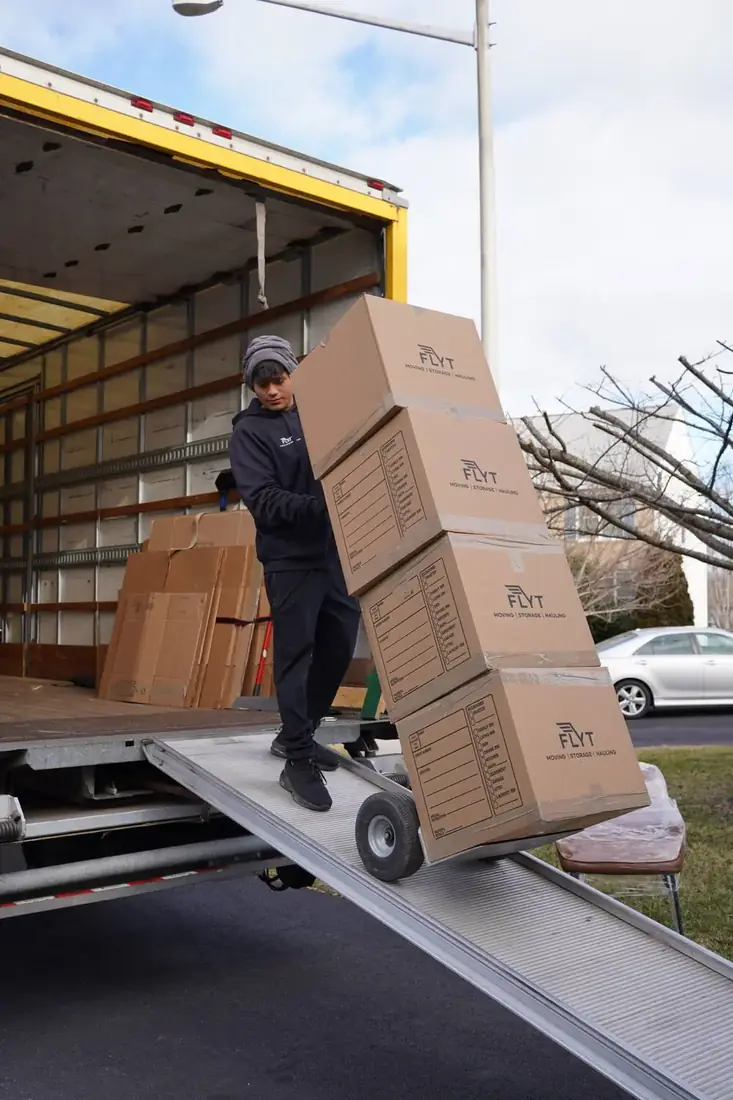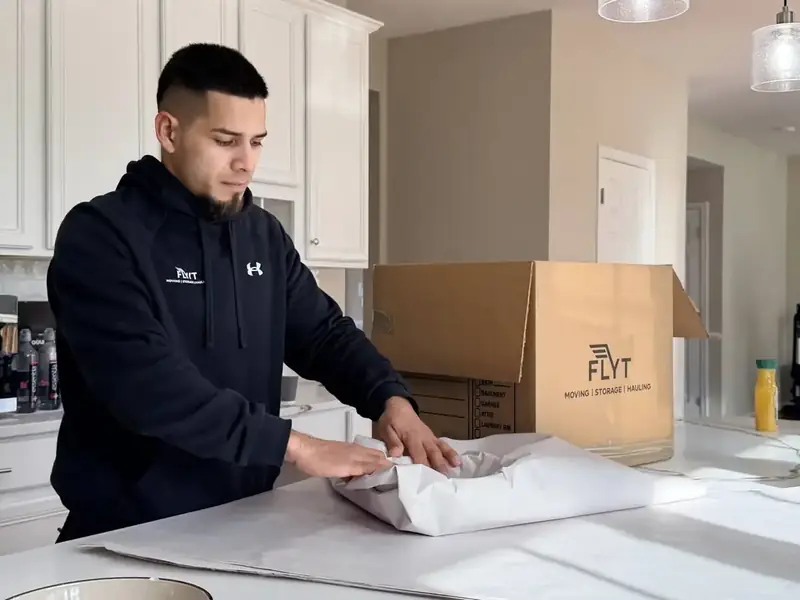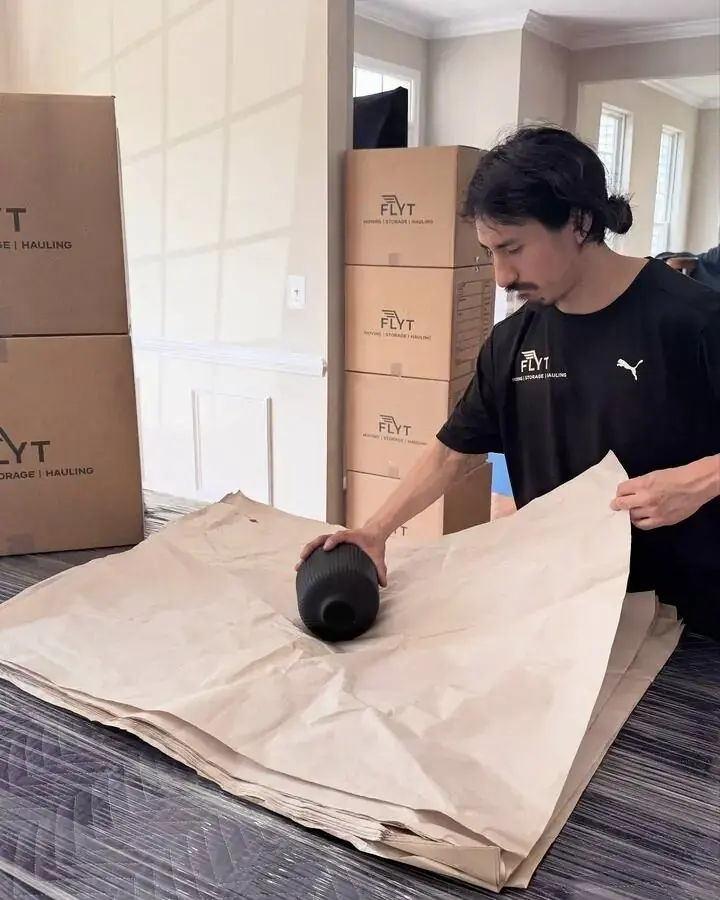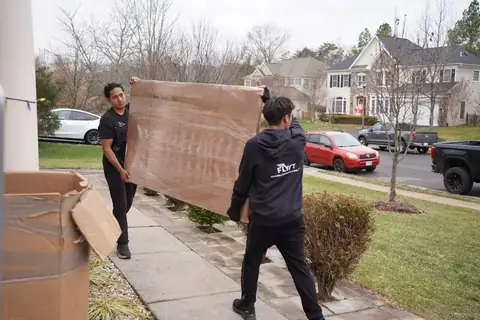

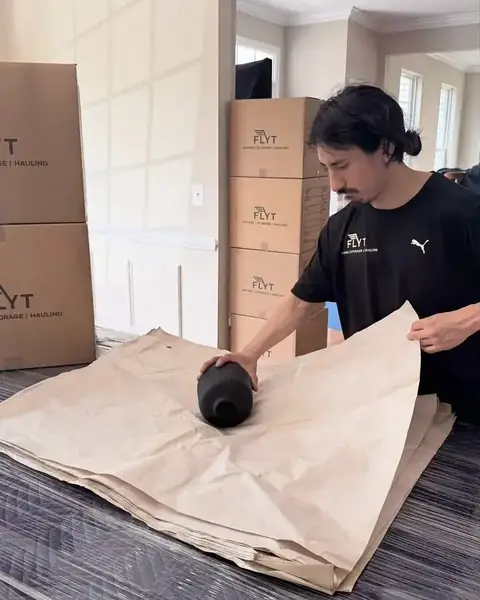
A box really only fails two ways: the bottom drops out, or it gets so heavy nobody can carry it without a groan. Both are easy to avoid once you stop thinking about boxes as one-size-fits-all. The real trick is matching the box to what goes inside, then filling and taping it so the weight sits low and stays put. Do that, and your boxes stack flat on the truck, nothing shifts when the driver hits a pothole on the Beltway, and the whole load moves faster. Here's how we pack after a thousand-plus DMV moves a year, from Ashburn townhomes to Old Town walk-ups.
Heavy things go in small boxes, light things in big ones
This is the rule that saves the most backs. Books, canned goods, tools, dishes, and records belong in small boxes, the 1.5 cubic foot 'book box' size. A small box packed with books tops out around 40 pounds, which one person can actually lift. Load those same books into a large box and you've built something close to 90 pounds that two people struggle with and drop. Flip it for the light stuff: pillows, comforters, lampshades, and winter coats go in the big boxes. They fill the space without adding real weight, so the box stays liftable and your closets empty fast.
Fill every box to the top, but don't cram it
A box is only strong when it's full. Leave empty space at the top and the lid caves the moment something stacks on it, which crushes whatever's inside. So fill each box level with the flaps, using towels, packing paper, or soft goods to take up gaps. There's a limit, though. Overpacking so the flaps bulge and won't close flat is just as bad: the box won't stack, the tape strains, and the seams split. The goal is snug and square. Give it a gentle shake. If nothing rattles and the top closes flush, you've got it right.
Tape the bottom like you mean it
Most blowouts happen on the bottom seam, not the top. Folding the flaps over each other, the classic interlock, feels secure but pops open under weight. Instead, run a strip of quality packing tape straight down the center seam, then add a strip across each end so you've made an H. For anything heavy, books especially, add a second center strip. Skip the thin dollar-store tape here. It stretches and peels in a cold truck. A couple extra seconds of taping beats chasing your grandmother's china across a parking lot in Fairfax.
Balance the load and label the top
Pack heavier items on the bottom of each box and lighter ones up top, the same way you'd load a grocery bag. That keeps the center of gravity low so the box doesn't tip when it's carried. Write the room and a quick note of what's inside on the side of the box, not just the top, so labels stay readable when boxes are stacked on the truck. Mark the heavy ones clearly. And keep individual boxes under about 50 pounds. Your crew will move a stack of manageable boxes far quicker than a few backbreakers, and nothing gets set down hard.