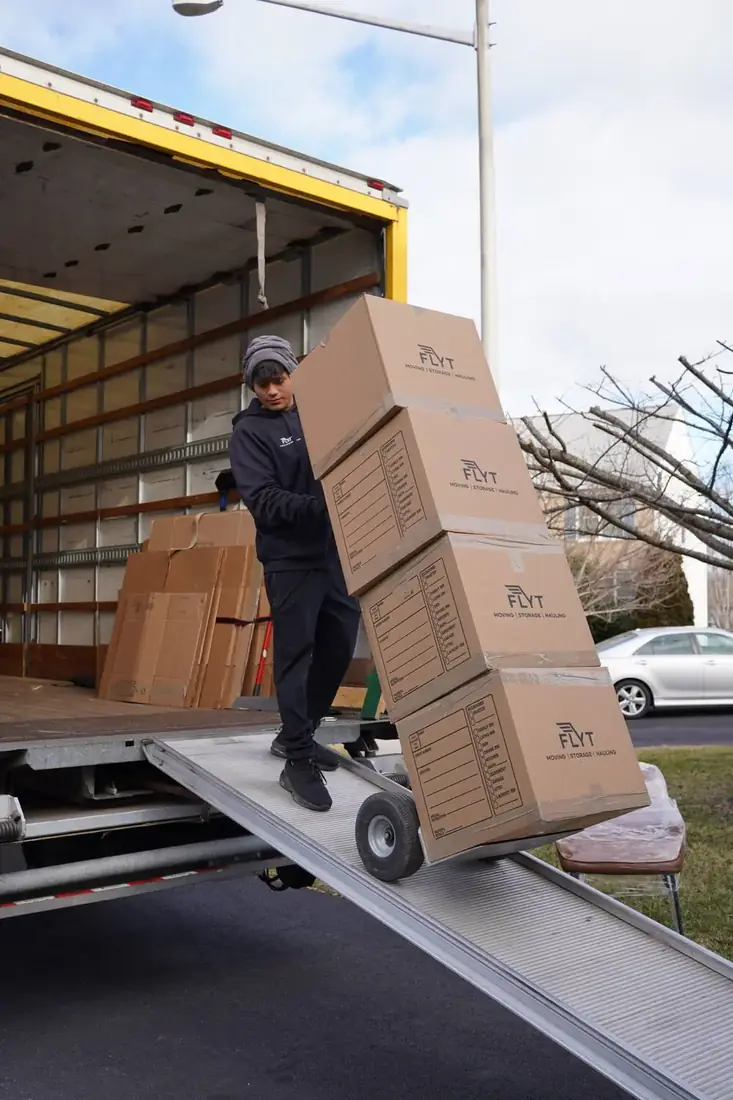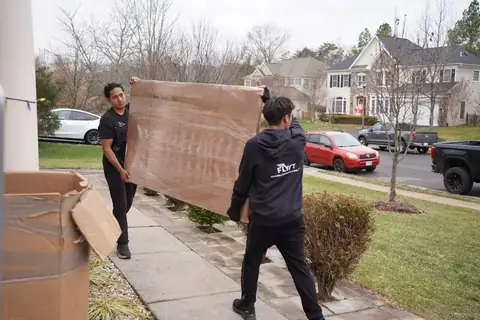


Every box you pack is a box someone has to carry, load, drive, and unload. On a local move billed by the hour, that math is simple: the less you haul, the less you pay, and the faster your day ends. The best time to thin things out is before a box gets taped shut. This guide walks you through a room-by-room plan, a realistic timeline, and honest rules for what to donate, sell, or throw away. Do this well and you move into your next place in Fairfax, Rockville, or DC with only the stuff you actually want.
You Pay to Move What You Keep
Local moves here are billed hourly on crew size and trucks, with a three-hour minimum. So the volume you keep directly shapes the clock. That treadmill you have not touched since 2019, the four half-used paint cans, the boxes you moved last time and never opened: all of it adds weight, time, and truck space. Before you pack anything, ask a blunt question about each item. Would I pay to load this, drive it across town, and carry it up the new stairs? If the answer is no, it should not make the trip.
Go Room by Room, Not All at Once
Trying to declutter the whole house in one weekend burns you out by lunch. Instead, take one room at a time and finish it before you move on. Start with the low-emotion zones like the linen closet, the pantry, and the garage, where decisions are easy and the wins build momentum. Save the sentimental rooms, the attic and the home office, for last when you have your rhythm. Keep three bags or bins open in every room: keep, donate, and toss. Touch each item once and drop it in a bin.
Donate, Sell, or Toss Without Overthinking
Sell only the things genuinely worth the effort: real furniture, electronics, tools, anything that would fetch a decent price on Facebook Marketplace or at a consignment shop. Everything else in good shape goes to donation. Habitat for Humanity ReStores and local charities across Loudoun and Fairfax will take furniture and housewares, and many offer pickup if you schedule ahead. Broken, stained, or expired items go straight to the toss or recycle pile. Do not agonize. If selling it would eat three weekends, just donate it.
Give Yourself a Realistic Timeline
Start about four weeks out. In week one, hit storage zones like the garage, basement, and closets. Week two, tackle the kitchen and living areas. Week three is bedrooms and the bathroom. The final week is for hauling donations out and scheduling a bulk pickup or a dump run. Spreading it across a month means you make calm decisions instead of panicked ones. It also means donation trucks and junk haulers have time to come before moving day, so none of that clutter rides along by accident.
Know What Movers Cannot Take Anyway
Some things have to go regardless of sentiment because a moving truck cannot carry them safely. Propane tanks, gasoline, aerosols, paint, cleaning chemicals, and other flammables are off the truck for good reason. Perishable food from the fridge and freezer will not survive the trip either. Sort these out early so you are not stuck in the driveway on moving day wondering what to do with a half tank of propane. Use it up, give it away, or drop it at a county hazardous waste site.