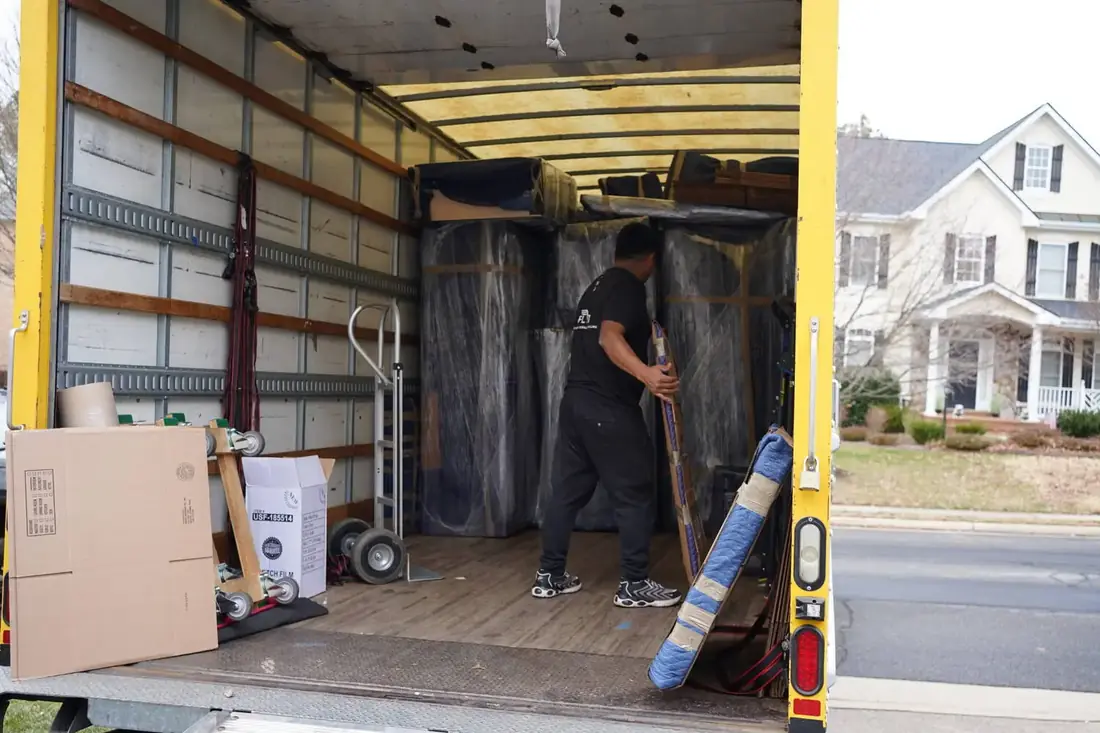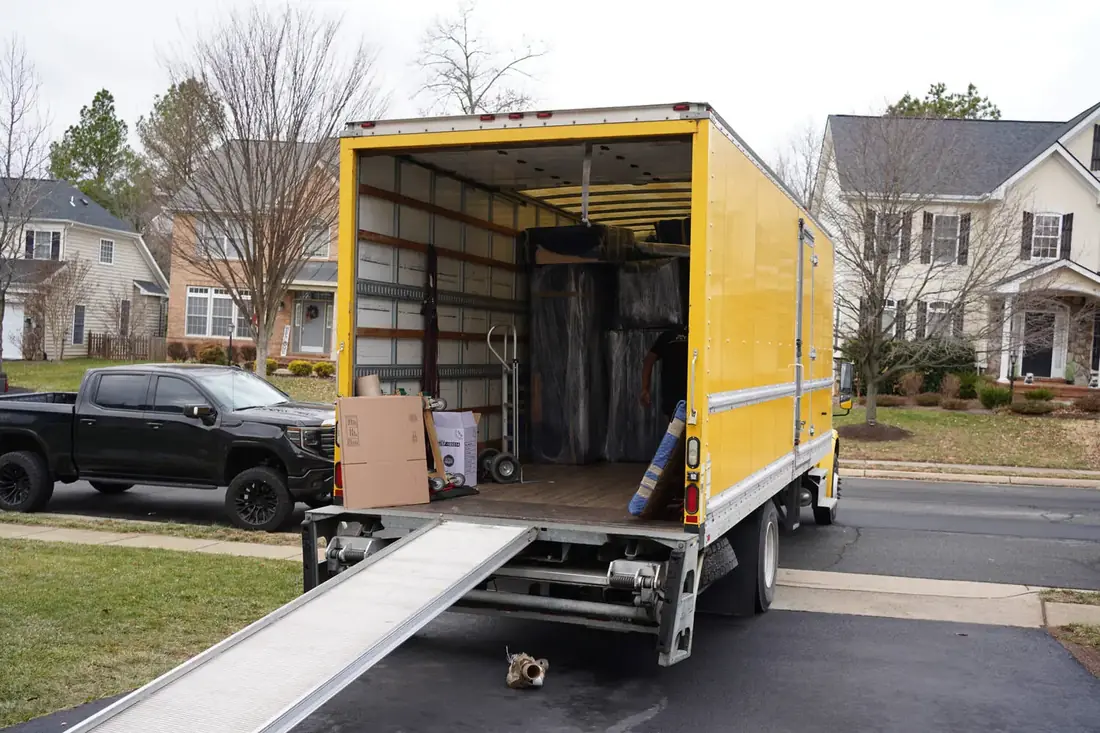


West of Leesburg, Loudoun changes fast. The townhome courts give way to farms, horse properties, wineries, and small towns like Purcellville, Round Hill, Hamilton, Lovettsville, and Waterford. Moving out here is a different job than moving in Ashburn. Roads are narrower, some are not paved at all, driveways can run a long way back from the road, and the property often has more than a house on it. Here is how to plan a western Loudoun move so the truck gets to your door and nothing gets left in the barn.
Gravel roads and what they mean for a truck
Western Loudoun has roughly 300 miles of gravel roads, and a lot of people want to keep them that way. They are part of what makes the area feel the way it does. For a moving truck, though, gravel means slower driving, ruts, and soft spots after rain.
A big truck handles most gravel roads in dry weather. After a few days of rain, or during a thaw, a soft road or driveway can be a real problem. If your home is on a gravel road, say so when you book, and keep an eye on the forecast the week of the move.
Long driveways, turnarounds, and low branches
The road is only half of it. Many rural homes sit at the end of a long driveway with a tight turn, a narrow bridge, or no room to turn a truck around. Overhanging branches can scrape the top of a box truck long before anyone notices.
When you call for an estimate, describe the driveway: how long it is, whether it is paved, whether there is a place to turn around, and whether anything hangs low. If the big truck cannot get close, the options are a longer carry or a smaller truck making trips, and that is much better planned in advance than worked out on the day.
Barns, workshops, and outbuildings
Farm properties come with extras: a barn full of tools, a workshop, a detached garage, a shed with a mower and a generator. People price their move on the house and forget the rest.
Walk the whole property before you get an estimate and list what is going. Some items need prep. Drain gas and oil from mowers and equipment before the move, and know that some things, like propane tanks, cannot go on a moving truck at all. Start on the barn early, because it always takes longer than you think.
Old houses in old towns
Western Loudoun's towns have a lot of older homes. Waterford is a National Historic Landmark district, and Hamilton, Lovettsville, Purcellville, and Round Hill all have houses that are a century old or more. Old houses mean narrow stairs, low doorways, and floors worth protecting.
We measure big pieces ahead of time and plan what needs to come apart. If you are moving into an old house, check the stairway and doorway widths against your largest furniture before move day.
Distance, timing, and the drive out
From the eastern side of the county, western Loudoun is a longer drive. Route 7 runs out to Purcellville and Round Hill, Route 9 heads toward Hillsboro, and Route 15 runs north from Leesburg toward Lovettsville. On a local hourly move, drive time counts, so a move from Sterling to Lovettsville takes more time than one across Ashburn.
Ask for an estimate that includes travel, and if your move has two stops, such as a house and a barn on different properties, tell your mover so the plan covers both.
Wells, septic, and service out west
Many western Loudoun homes run on a private well and a septic system instead of public water and sewer. That does not change the move itself, but it changes your first week. Ask the seller where the shutoffs are, when the septic was last pumped, and whether the well water has been tested.
Internet and cell service can also be patchier out west than in Ashburn. Check what service is available at the address before move day, especially if you work from home.
Packing a farmhouse
Farmhouses collect things: tools, tack, canning jars, antiques, and furniture that has been in the family for generations. Pack heavy tools in small boxes so they can be lifted, wrap antiques one at a time, and keep anything with fuel or chemicals out of the household boxes. If tack or equipment is headed to a barn at the new place, label it for the barn so it does not end up in the living room.
Horses, livestock, and big equipment
A household mover moves your household goods, not animals. If you have horses or livestock, line up a licensed animal hauler for them separately, and plan their move so they are settled before the furniture arrives. Tractors, trailers, and vehicles are another special case, so ask your mover what can go on the truck and what needs its own transport.